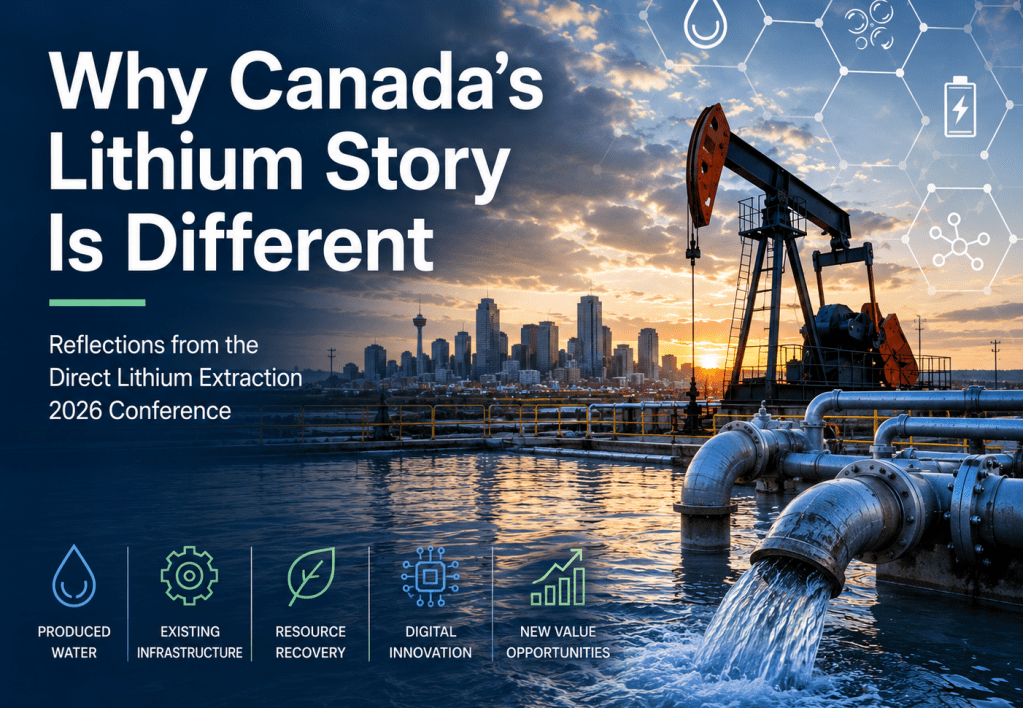
Reflections from the Direct Lithium Extraction 2026 Conference
After spending two days at a conference dedicated to Direct Lithium Extraction (DLE), I expected to leave thinking about adsorption technologies, lithium recovery rates, pilot plants, and process chemistry.
Instead, I left thinking about produced water.
That was not the takeaway I expected.
One of the strongest themes throughout the conference was that Canada’s emerging lithium industry may be developing under a very different set of drivers than the lithium industries traditionally associated with South America.
In jurisdictions such as Argentina and Chile, lithium is the primary resource. Companies explore for lithium, develop lithium projects, and build operations specifically designed to produce lithium chemicals.
Many of the discussions I observed in Canada started from a different premise.
The question was not:
How do we develop a lithium resource?
The question was:
Can we recover value from water streams that already exist?
That distinction may prove more important than any individual extraction technology currently being discussed.
A Different Starting Point
Throughout the conference, discussions repeatedly returned to produced water, oilfield brines, geothermal fluids, existing infrastructure, water treatment, and resource recovery.
Unlike traditional lithium projects, where lithium extraction is the primary business objective, many Canadian initiatives are evaluating whether valuable minerals can be recovered from streams that are already being managed as part of existing industrial operations.
In many cases, the water already exists.
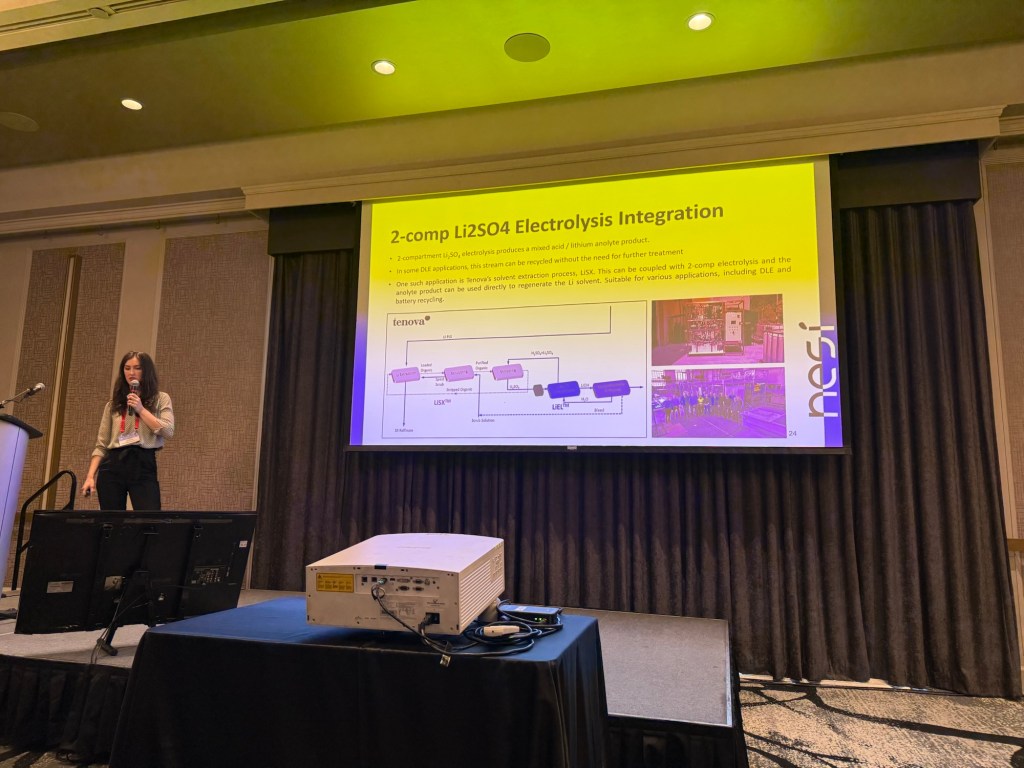
The conference highlighted a strong focus on produced water, oilfield brines, geothermal fluids, and resource recovery opportunities within existing industrial infrastructure.
The infrastructure already exists.
The operators already exist.
The challenge is determining whether lithium—and potentially other critical minerals—can be recovered economically from those streams.
This creates a fundamentally different development model than the one commonly associated with South American salars.
Rather than building an operation around a lithium deposit, the opportunity may lie in extracting additional value from infrastructure and water streams that are already part of the energy sector.
The Future Lithium Producer May Not Look Like a Mining Company
Another observation that stood out to me was the diversity of industries represented in the discussions.
Many of the opportunities being explored are closely linked to:
- Oil and gas operations;
- Produced-water management;
- Water treatment infrastructure;
- Geothermal energy; and
- Chemical processing systems.
As a result, Canada’s lithium sector may evolve as a hybrid of several industries rather than as a conventional mining sector.
This raises an interesting possibility:
The future lithium producer in Canada may not look like a mining company at all.
Instead, it may emerge from organizations already managing large volumes of water, operating industrial infrastructure, and looking for new ways to generate value from existing assets.
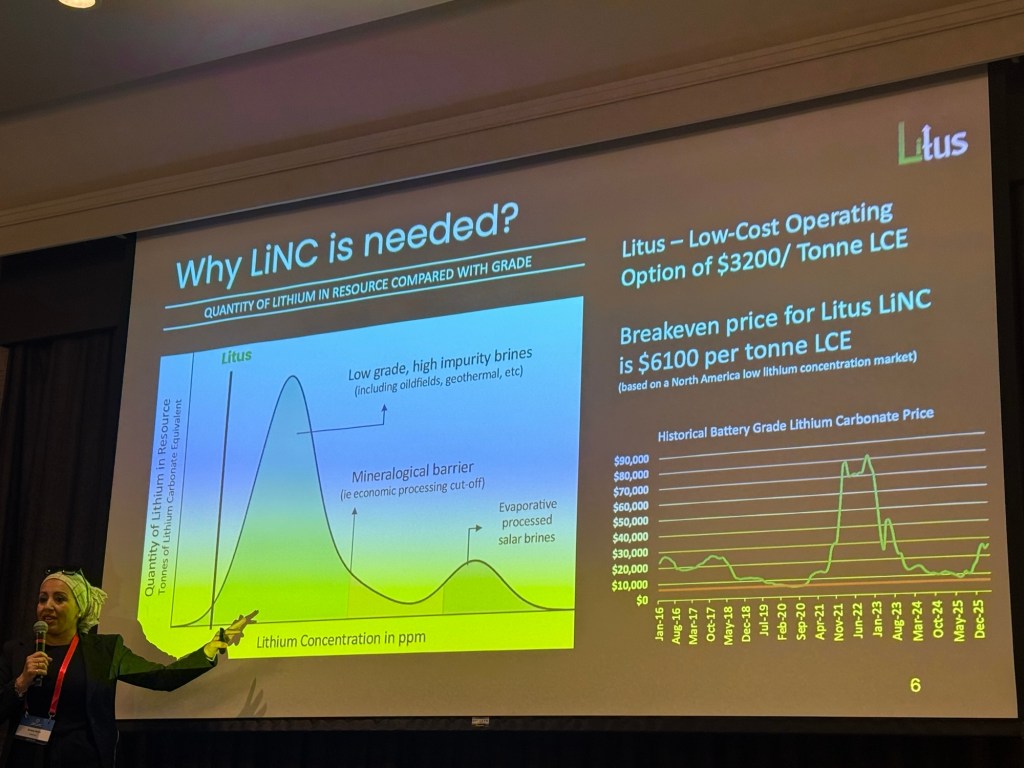
One of the more interesting observations was the diversity of attendees and industries represented, including energy, water treatment, technology, engineering, and critical minerals sectors.
As someone who works in mining and industrial risk, I found this particularly interesting because it challenges many of the assumptions we typically make about where future resource projects originate and who ultimately operates them.
The Industry Has Moved Beyond Extraction Chemistry
A few years ago, much of the conversation around Direct Lithium Extraction focused on whether lithium could be selectively extracted from complex brines.
That question appears to be largely answered.
The discussions I observed were increasingly focused on:
- Scale-up;
- Water management;
- Product purity;
- Reagent consumption;
- Process integration;
- Reliability; and
- Commercial deployment.
The most interesting presentations were not necessarily the ones reporting the highest recovery rates.
They were the ones discussing how to build reliable industrial systems.
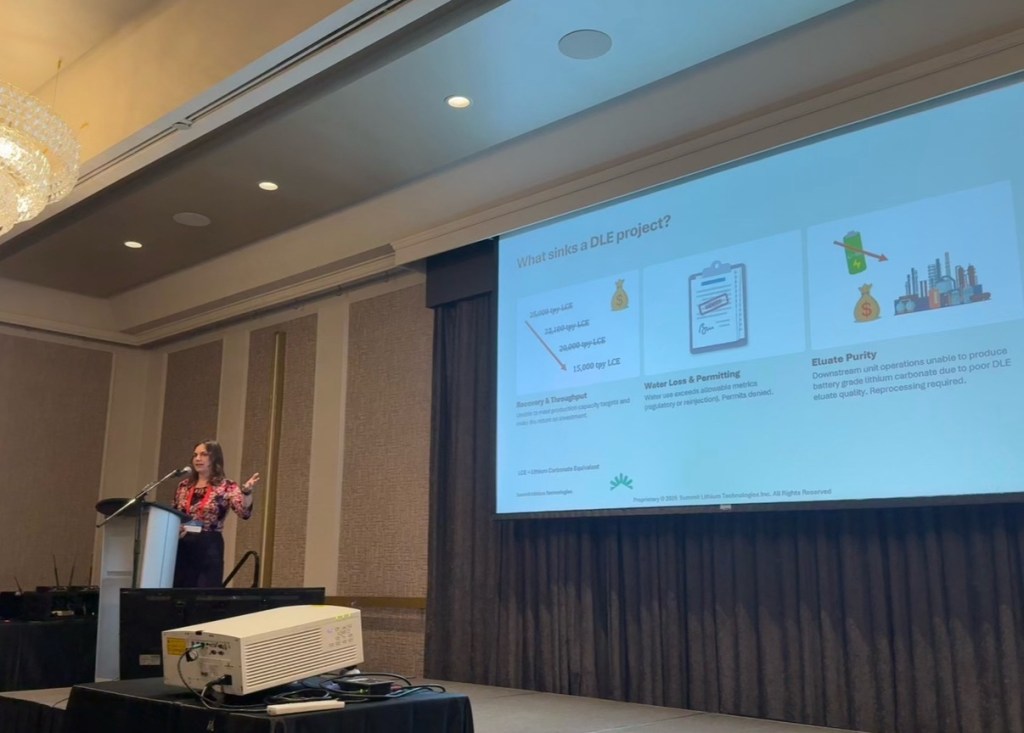
Many presentations focused not only on extraction technologies but also on water recovery, reagent production, refining, and commercialization pathways.
The industry appears to be transitioning from proving the chemistry to proving the business case.
And those are very different challenges.
History is full of technologies that worked in the laboratory but struggled in commercial deployment.
The next phase for DLE will likely be determined less by chemistry and more by execution.
The Most Underrated Topic of the Conference
Ironically, one of the topics that had the least to do with lithium may have the biggest long-term implications.
Several presenters discussed digital twins and predictive process models.
Most people view these technologies as optimization tools.
I left with a different perspective.
In my opinion, digital twins may become reliability and risk-management tools just as much as process optimization tools.
As industrial systems become increasingly complex, digital twins may support:
- Predictive maintenance;
- Reliability improvement;
- Operational decision-making;
- Performance monitoring; and
- Long-term asset management.
From a risk engineering perspective, that possibility is far more interesting than whether one extraction technology achieves 92% recovery while another achieves 95%.
The ability to model equipment behavior, monitor performance, predict degradation, evaluate process changes, and identify issues before they become failures has applications that extend far beyond improving production metrics.
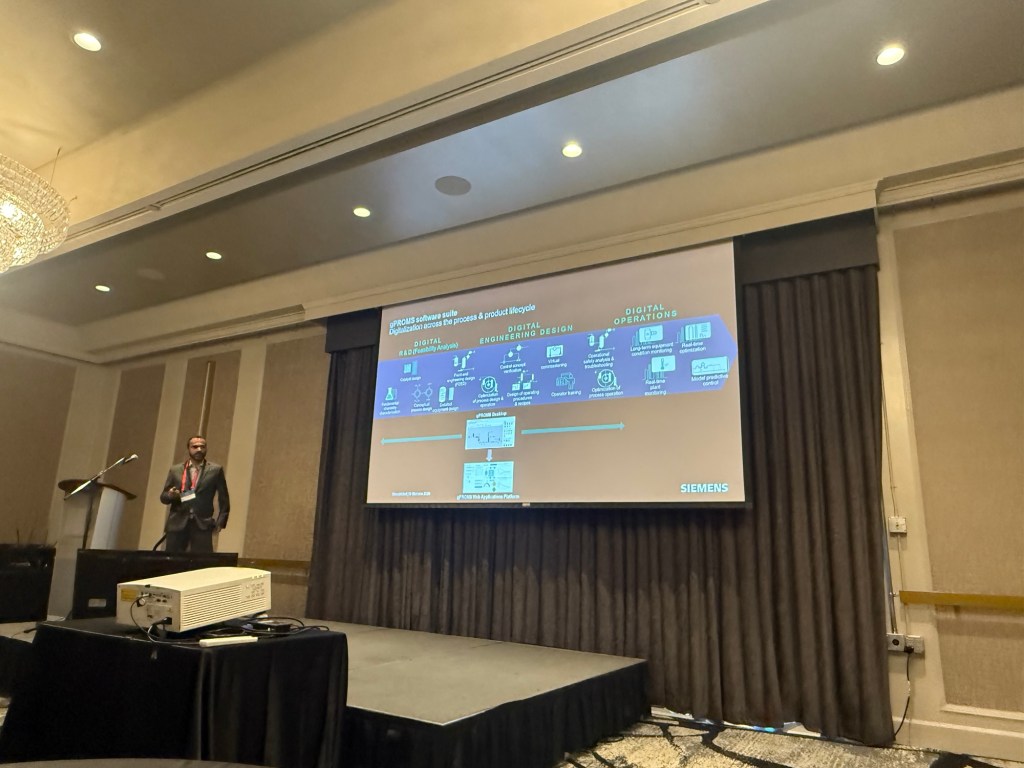
Several presenters highlighted the role of digital twins and predictive modelling in reducing scale-up risk and improving operational performance.
Eventually, every technology reaches a point where reliability matters more than recovery.
That may be one of the most important lessons not just for DLE, but for any emerging industrial technology.
Looking Beyond Lithium
Perhaps my biggest takeaway from the conference is that the broader opportunity may not be lithium itself.
It may be the growing ability to recover value from industrial water streams that were historically viewed as waste.
Lithium happens to be the commodity attracting attention today.
But the larger story may be the convergence of:
- Critical minerals;
- Energy infrastructure;
- Water management;
- Process engineering; and
- Digital technologies.
If successful, this approach could create opportunities that extend well beyond lithium and reshape how we think about resource recovery.
More importantly, it may challenge the traditional boundaries that separate industries.
Mining, energy, water treatment, and chemical processing have historically operated as distinct sectors.
What I observed at the conference suggests those boundaries are becoming increasingly blurred.
Final Thoughts
Technology conferences often focus on individual innovations.
What I enjoy most is stepping back and looking for larger patterns.
The pattern I observed was clear: Canada’s emerging lithium industry is not simply replicating models developed elsewhere in the world.
It appears to be developing its own identity—one shaped by produced water, existing infrastructure, environmental considerations, and the intersection of industries that historically operated independently.
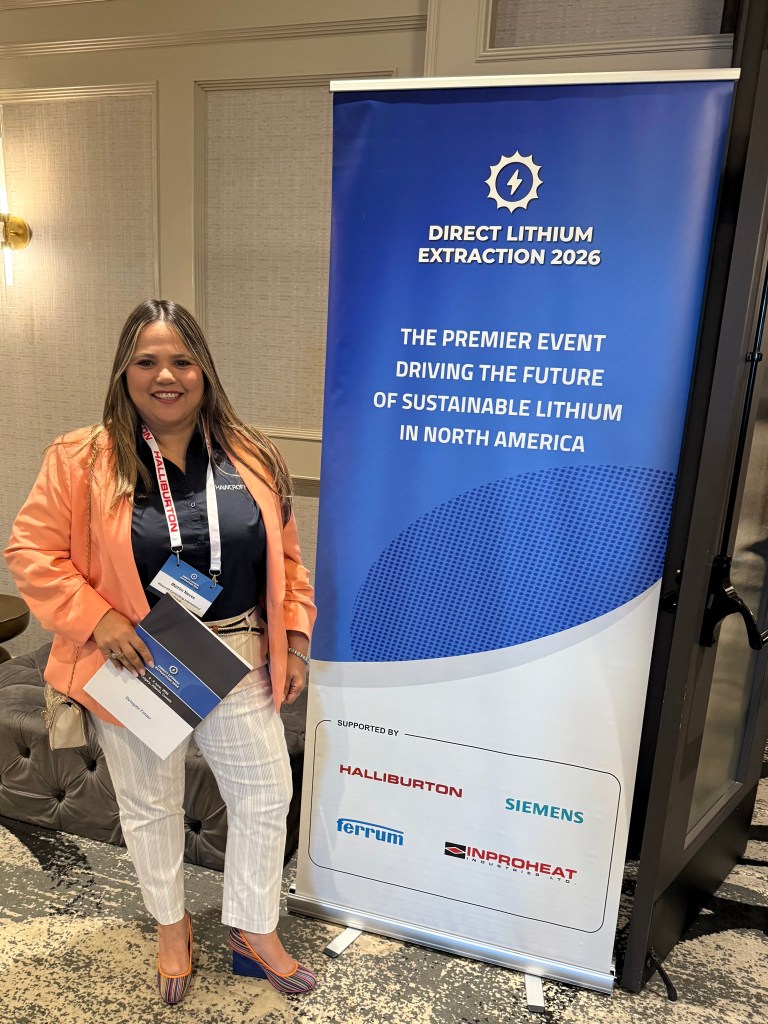
Whether every technology presented ultimately succeeds is almost beside the point.
The bigger story may be the emergence of entirely new business models built around extracting value from industrial water streams.
And if that happens, Canada’s lithium future may look very different from the one currently being developed elsewhere in the world.
As a completely unrelated side note, I submitted the attendee survey, won the conference raffle, and came home with a new pair of Bose earbuds. Not a bad way to end the conference.



 Mairim Neves
Leave a comment