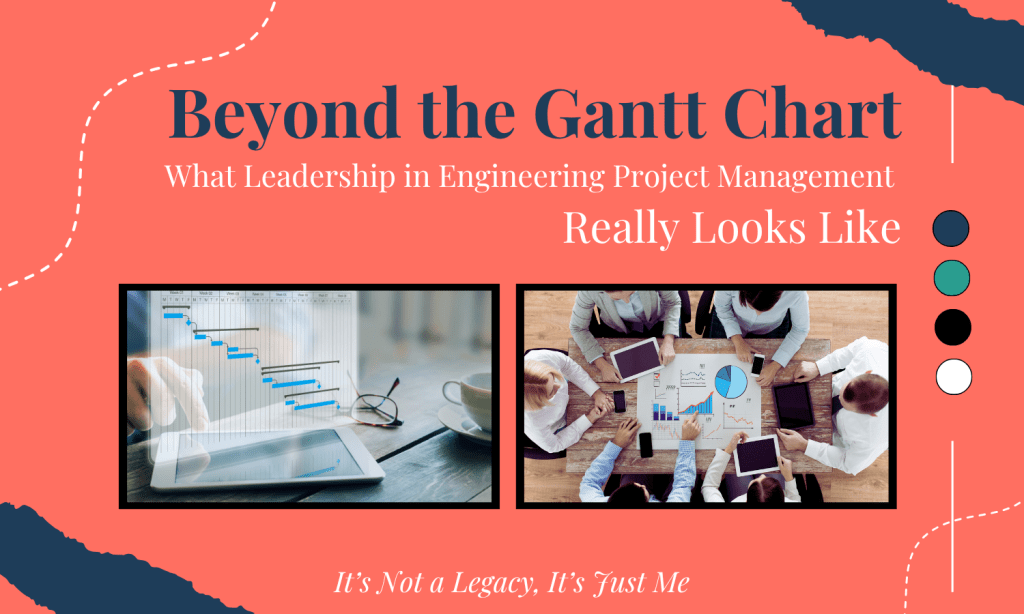
What Leadership in Engineering Project Management Really Looks Like
In my last performance review, I said something that surprised even me:
“I came here to work with people, not to fight between departments.”
That one sentence carried the weight of months of quiet frustration. The collaboration that once defined our work had slowly eroded, replaced by silos, power struggles, and a growing sense of distrust. It reminded me of something I once read about siblings:
“When the war is outside the family, siblings unite. But when the war is inside, they fight each other to survive.”
That hit home — because it doesn’t just apply to families. It applies to teams, to companies, to any group that’s supposed to pull in the same direction. When the internal environment becomes combative, the damage goes far beyond missed deadlines. It eats away at trust. It breaks down morale. And it kills momentum.
Most people still think project management is about tools — Gantt charts, KPIs, risk matrices. And yes, those have their place. But when things go wrong — and they will — it’s not the spreadsheet that pulls a project back from the edge.
It’s people.
After 24+ years in engineering and project execution, here’s what I’ve learned:
Leadership isn’t measured by deliverables. It’s measured by how you show up when everything feels like it’s falling apart.
- When someone makes a mistake and looks to you for guidance, not blame.
- When a deadline looms and tension is rising, and your response sets the tone for everyone else.
- When your team needs clarity, stability, and trust more than another status meeting.
These aren’t soft skills. They’re survival skills in high-stakes environments.
What leadership has looked like for me:
Building trust before the crisis hits.
You can’t fake it when the pressure’s on — your team either believes in you or they don’t. And that belief comes from what you do when things are calm.
Choosing mentorship over micromanagement.
I want more than completed tasks — I want to grow people who are confident, capable, and ready for what’s next. Leadership is legacy.
Staying calm in chaos.
When the furnace goes cold days before winter hits — and yes, that happened — your calm becomes the team’s anchor.
Over the years, I’ve led projects where towers imploded, supply chains crumbled mid-fabrication, and plans were rewritten overnight. Every time, what saved us wasn’t perfect planning.
It was strong relationships. Psychological safety. Mutual respect.
So no — I’m not here to throw out Gantt charts. I’m just here to remind you that leadership lives in the spaces those charts can’t reach.
If you’ve ever had to lead a team through a fractured environment, I’d love to hear from you: What does leadership look like for you — beyond the Gantt chart?
En este post comparto una reflexión muy personal que surgió durante una revisión de desempeño. Me di cuenta de que el ambiente de trabajo se había vuelto tóxico: los equipos ya no colaboraban, sino que competían entre ellos. A través de una analogía con los hermanos que luchan entre sí cuando el conflicto está en casa, expongo cómo la verdadera gestión de proyectos no se basa solo en herramientas, sino en liderazgo humano.
Ese liderazgo que se demuestra cuando todo está en crisis, cuando se requiere confianza, calma y guía. Para mí, liderar significa construir relaciones antes del caos, elegir mentoría en lugar de control, y crear equipos resilientes. Porque más allá del Gantt Chart… está la gente.



 Mairim Neves
Leave a comment